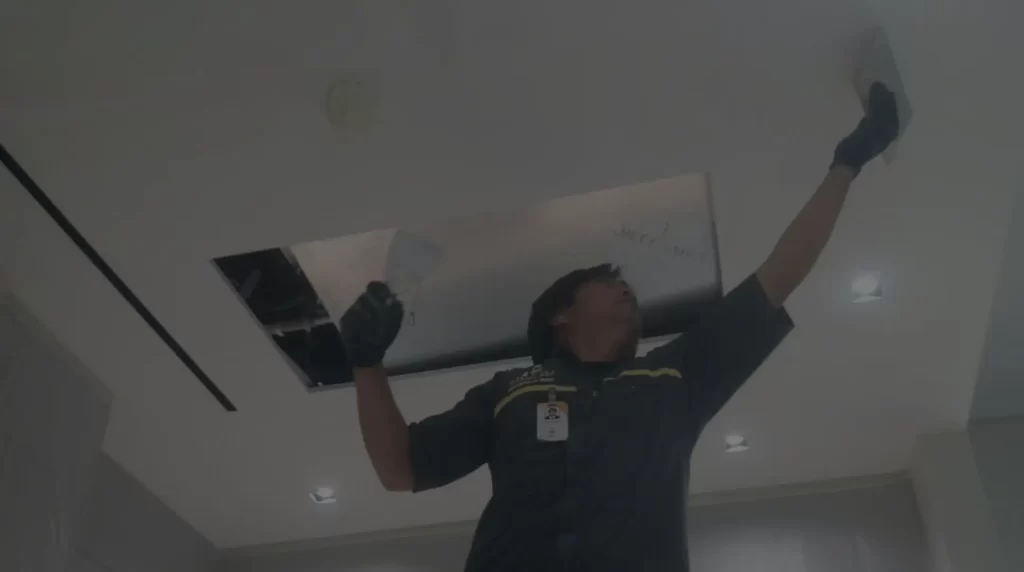



Before starting the laundry or unpacking into every cupboard, take a short walk through your Dubai home. Look for changes that may have developed while you were away: a fresh ceiling mark, water beneath a sink, a damp wardrobe or an AC unit behaving differently.
Most of this check involves observation. You do not need to open equipment or investigate concealed areas yourself. The aim is to notice a problem early, record it clearly and arrange the right help before normal household activity hides the clues.
Check for immediate hazards first
If you find standing water near electrical equipment, a bulging ceiling, smoke or a burning smell, keep clear and arrange urgent assistance. Do not step into water to reach a switch or restart equipment that may have been affected.
If there is a gas smell, leave the area without operating electrical switches and contact the appropriate emergency service from a safe location. These conditions need attention before any routine home checklist.
For an active water leak, only use an isolation valve if you know it serves your property and can reach it safely. Do not alter shared building valves. Notify management when the problem may involve another apartment or communal equipment.
Make one careful walk through the rooms
Move through the home in a consistent order. Photograph anything unusual before cleaning or putting furniture back in place.
Area | What to observe |
Ceilings and walls | New marks, peeling finishes or changes around AC grilles |
Kitchen cupboards | Damp shelves and visible water beneath the sink |
Bathrooms | Unexpected wetness, persistent drips or a toilet that keeps refilling |
Wardrobes and storage | Musty smells, damp contents or visible spotting |
Windows and balcony doors | Condensation, staining or signs of water entry |
Accessible outdoor areas | Unexpected pooling or irrigation still running |
Tell the person inspecting the issue when the room was last known to be dry. Travel dates and any visits by cleaners or maintenance teams can help establish a useful timeline.
Investigate damp smells before covering them up
A closed room may smell stale, but a persistent musty odour deserves a closer look. Check visible surfaces without disturbing suspected growth. Avoid spraying fragrance and assuming the problem has gone away.
If belongings or building materials are wet, arrange prompt advice on drying and treatment. The EPA’s guidance on indoor biological contaminants recommends addressing moisture promptly and drying wet materials as soon as possible, ideally within 24 to 48 hours. After a holiday, you may not know when the wetting began, so do not assume you still have that window available.
Photograph affected belongings before moving or discarding them. Avoid carrying visibly contaminated items through other rooms without advice on handling. Large affected areas, hidden damage and contaminated water need an appropriate professional response.
Check the AC before returning to normal use
Look for visible water damage around the unit and accessible grilles. If you know or suspect that the AC system is contaminated with mould, leave it off and seek professional advice before operating it. The EPA’s home mould guide explains the risk of spreading contamination through the system.
If there are no such concerns, use the normal controls and observe whether cooling, airflow and sound are as expected. Follow the manufacturer’s instructions if the equipment was fully shut down. Stop using it if a new fault appears.
Record which room is affected and what changed. Saying that the bedroom takes much longer to cool is more useful than reporting only that the AC feels wrong. Mr Fixer’s AC maintenance service is relevant when normal operation has changed.
Review water use while the home was empty
Open your DEWA account and review any alerts or unusual consumption during the trip. Check with anyone who had access to the property before deciding that the usage is unexplained.
If water use continued unexpectedly, inspect accessible fixtures and arrange a plumbing check where necessary. Keep the consumption dates with your photographs and travel dates so the investigation has a clear starting point.
DEWA’s Away Mode information describes regular consumption reports and alerts during an absence. It can support monitoring on future trips, but it does not replace an arrangement for someone to respond to a problem.
Restart household routines thoughtfully
Follow appliance instructions before returning equipment to use, especially if water or electricity was isolated. Ask building management about its water-system guidance after a prolonged absence. The CDC’s guidance for buildings with reduced water use explains why stagnant water needs attention. Do not assume clear-looking water alone establishes that a stored supply is suitable for drinking.
Avoid immediately deep-cleaning an affected room before the source of dampness has been assessed. Adding water through heavy cleaning can also make the original condition harder to distinguish. Explain what you have already cleaned when you request help.
If the home appears normal, complete your usual cleaning and unpacking, then keep an eye on any slight changes you noted during the first walk-through.
Prepare a better plan for the next trip
Before travelling again, agree on a property-specific cooling and humidity plan with the relevant technician or management team. Check how any dehumidifier will drain and whether it is suitable for unattended operation under its instructions.
Nominate someone with authorised access and give them practical contact details. Ask them to look for visible leaks, new marks and changes in equipment operation, and to report concerns promptly. Update the plan after any repair so it reflects the home’s current condition.
FAQs
Use outdoor conditions and the home’s condition to guide ventilation. Humid outdoor air may add moisture. Do not use open windows as a substitute for investigating a persistent damp smell or visible damage.
No single outcome applies to every property. Moisture sources, building condition, ventilation and the duration of the absence matter. Get advice suited to the home before the next trip.
Not necessarily. Base the decision on what you find, the duration and conditions of the absence, and whether equipment is due for service. Share specific concerns so the visit has a clear purpose.
Arrange help for anything that has changed
Mr Fixer offers plumbing repairs, mould removal and AC maintenance in Dubai. Contact our team with your observations to discuss the appropriate next step.