


A musty smell that appears when the AC starts deserves investigation, especially if it returns after cleaning. The smell may involve moisture in the cooling system or air being drawn from another damp area. Its timing can help locate the problem, but the odour alone cannot identify the cause.
Before booking a cleaning package, record which room is affected, when the smell begins and whether there are any visible changes around the grille or ceiling. A targeted inspection can then establish what actually needs attention.
Separate a musty odour from an urgent warning
An earthy or damp smell calls for a moisture investigation. A burning smell, smoke or signs of overheating need a different response. Stop using the affected equipment if you can do so safely and arrange urgent assistance. Do not repeatedly restart it to see whether the smell clears.
If you know or suspect there is mould contamination inside the AC system, leave it off and request professional advice. The EPA’s air duct guidance warns that operating a contaminated system can distribute mould. A musty smell by itself, however, is not confirmation that the ducts contain mould.
Record when the smell appears
The following observations are useful before a visit:
- Does the smell begin as soon as the fan starts or after cooling has been running?
- Does it fade quickly or remain throughout operation?
- Is it noticeable at one grille or in several rooms?
- Is the smell still present when the AC is off?
- Did it start after a leak, a long absence or recent maintenance?
Write down what you notice without repeatedly operating a system you suspect is contaminated. Share any relevant service report so the next technician knows what was cleaned and what was not inspected.
Where a technician may investigate
An AC system produces water during cooling, and that water needs a clear drainage route. Trane’s guidance on musty AC smells identifies moisture-related problems, including condensate drainage, as reasons to investigate the system.
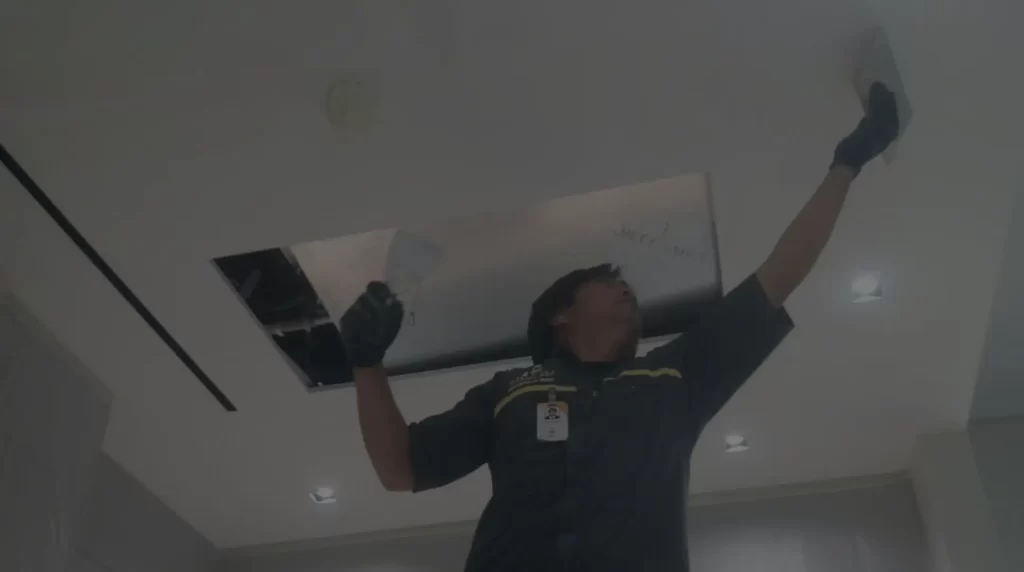
Depending on the equipment and the symptoms, the inspection may include accessible filters, the cooling coil, drain pan, condensate line and surrounding materials. Ask which components can be inspected during the visit and whether building access is required.
The room itself also matters. A damp cupboard, nearby wall or ceiling void may need attention even if the smell becomes more noticeable when air starts moving. Explain any previous water damage rather than assuming every odour at a grille begins inside the ductwork.
Understand the proposed cleaning scope
Different service names describe different work. Before agreeing to a quotation, ask what will be inspected and cleaned.
Proposed work | Question to ask |
Filter maintenance | Is this filter washable or replaceable, and is it the correct type? |
Coil cleaning | What condition was found on the coil, and how will surrounding components be protected? |
Drainage work | Was the drainage route checked, and how will normal flow be confirmed? |
Duct cleaning | What evidence supports cleaning the ducts, and which sections are included? |
Mould treatment | Which materials are affected, and how will the moisture source be addressed? |
Ask for photographs or a clear description of findings where access prevents you from seeing them. This makes it easier to understand the quotation and compare it with previous work.
Why an air freshener is not a repair
A fragrance may change what you smell without changing the condition that caused it. Spraying a product into an AC grille also gives you little control over where it lands.
Avoid pouring household chemicals into hidden pipework or spraying disinfectants through vents. Ask the technician to explain whether a cleaning product is appropriate for the equipment and materials involved. Follow the manufacturer’s maintenance instructions for any user-accessible parts.
If a previous visit provided only a fragrance or surface wipe, describe that accurately when requesting an inspection. It may explain why the problem still needs investigation.
What to confirm after the work
Ask for the service record to identify the fault or condition found, the components treated and any further repair required. If the technician finds wet insulation, water entry or damage outside the agreed scope, request a separate explanation and quotation.
Follow the instructions for returning the system to service. Once it is appropriate to use it, note whether the original smell returns under the same conditions. Report recurrence with the date and affected room rather than booking the same package again without reviewing the result.
Keep related tasks coordinated. An AC visit and a wall repair may need to address different parts of one moisture problem.
FAQs
No. It is a reason to investigate moisture and the source of the odour. A technician needs to examine the relevant equipment and surrounding area before recommending treatment.
No. The source may be elsewhere, and a duct cleaning visit may not include drainage or other repairs. Confirm the findings and scope before choosing a service.
Only if it is safely accessible and designed for user maintenance. Follow its instructions, switch off the unit as directed and let a washable filter dry properly before refitting it. Leave service panels and internal components to a technician.
Book an inspection for the source of the smell
Mr Fixer offers AC repair and maintenance in Dubai and mould removal services. Contact our team with the smell’s timing, affected rooms and any history of leaks so you can discuss the relevant service.